What Can You Use a Fish House For? Fishing, Camping, Hunting & More
Key Takeaway
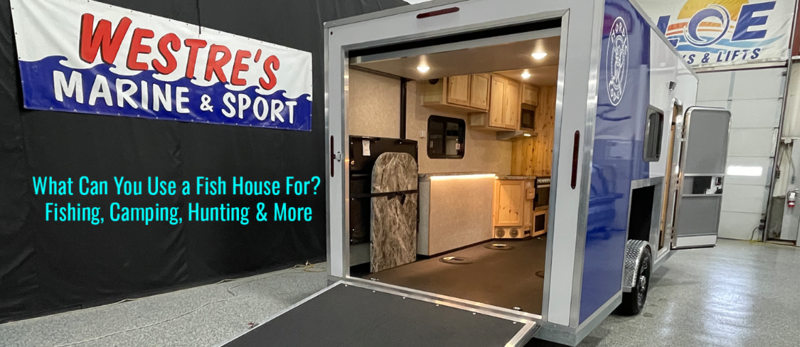
A modern fish house can be much more than an ice fishing shelter. Depending on the setup, it can also serve as a camper, hunting basecamp, toy hauler, and year-round recreational trailer. The tradeoff is that this versatility can cost more than a traditional camper.
Wondering which fish house fits how you’ll actually use it? Browse our fish houses and compare options built for fishing, camping, hauling toys, and year-round adventures.
Are Fish Houses Just for Ice Fishing?
Most people hear “fish house” or “ice house” and picture a shelter sitting on a frozen Minnesota lake.
That’s understandable, but today’s fish houses can do much more.
Jason Westre, owner of Westre’s Marine & Sport, describes a modern fish house as an “all-weather, all-season camper with the ability to fish out of.”
Since 2008, we’ve helped thousands of customers at our St. Cloud and Willmar locations choose boats, fish houses, and other recreational products. One misconception we regularly hear is that you need a camper for camping and a fish house for fishing.
For the right buyer, one fish house may do both, plus several other jobs. But there are real tradeoffs in price, water capacity, size, and layout.
That’s why Jason starts with one question:
How are you actually going to use it?
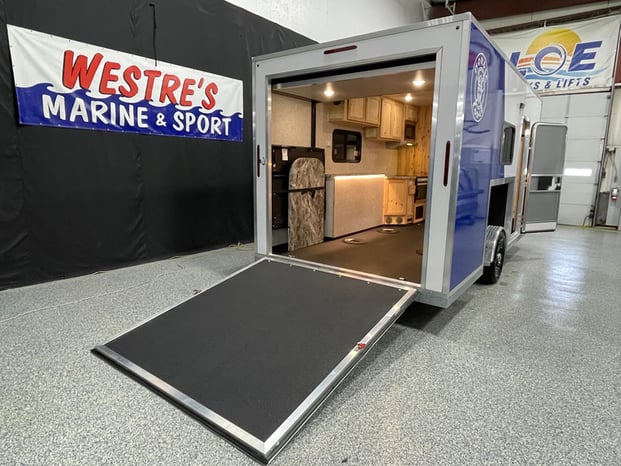
What Can You Actually Use a Fish House For?
Jason calls a modern fish house a “Swiss Army knife camper.”
Depending on the model and configuration, one unit can serve as:
An ice fishing house
A summer or winter camper
A hunting cabin or basecamp
A toy hauler
A mobile weekend cabin
A tailgating or event space
A cold-weather retreat
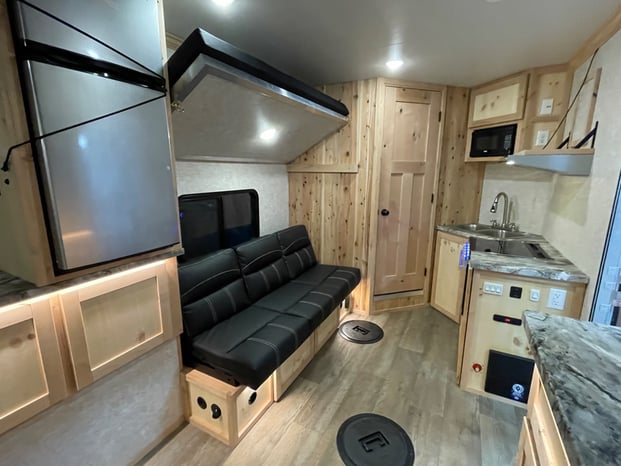
Many modern fish houses can be equipped with beds, cooking appliances, air conditioning, awnings, bathrooms, and water systems.
For the right buyer, one fish house may do jobs that would otherwise require multiple recreational trailers.
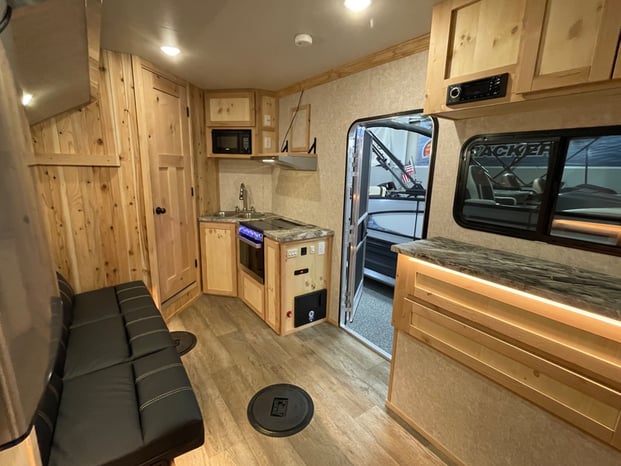
What Makes a Fish House Different for Ice Fishing?
The most obvious difference between a fish house and a traditional camper is that a fish house drops down close to the ground.
On the ice, that allows you to fish through holes built into the floor. The lower entry can also make getting in and out easier for people who struggle with camper steps.
For serious anglers, the interior layout matters just as much as the amenities.
Jason has seen buyers like a floorplan only to discover problems once they start fishing. A hole too close to a chair can make jigging uncomfortable. Put one in a walkway, and everyone has to maneuver around it.
A good-looking floorplan isn’t necessarily a good fishing floorplan.
Insulation matters, too, especially during a Minnesota winter.
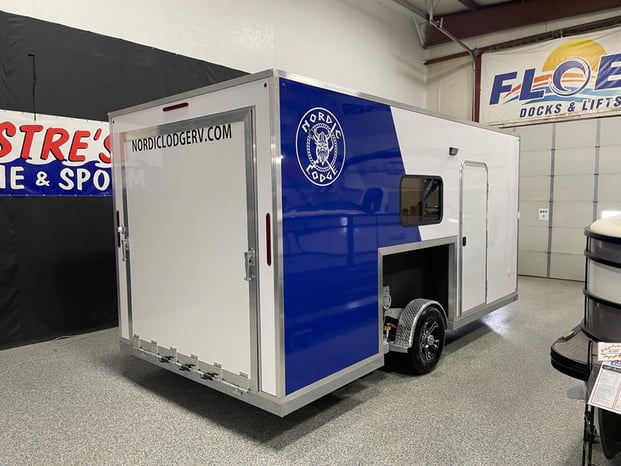
Can You Use a Fish House as a Summer Camper?
Yes. A properly equipped fish house can absolutely serve as a summer camper.
If camping is important to you, consider features such as air conditioning, an awning, sleeping accommodations, cooking appliances, and potentially a full water package.
But this is where Jason’s “Swiss Army knife camper” comparison matters.
A fish house can fish, camp, hunt, and handle cold weather, but a trailer designed exclusively for camping may do some camping-specific jobs better.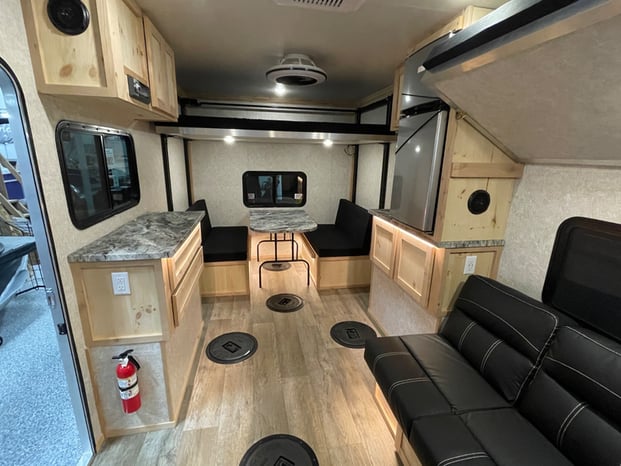
Fish House vs. Traditional Camper: Which Is Better?
Neither is automatically better. They’re designed around different priorities.
A fish house prioritizes versatility. A traditional camper prioritizes camping.
A fish house doesn’t necessarily camp better just because it can camp.
Fish houses generally cost more because you’re also paying for capabilities such as the drop-down design, insulation, and fishing functionality.
Water capacity can also be more limited because a fish house’s tanks typically need to be contained inside the unit. Traditional campers can offer larger water capacities and much larger floorplans.
Here’s a simple way to decide where to start:
Your Priority | Start With | Why |
Serious ice fishing | Fishing-focused fish house | Fishing layout comes first |
Fishing + camping | RV-style fish house | Balances both activities |
Mostly summer camping | Traditional camper | More camping specialization |
Hunting + cold-weather trips | Fish house | Built around cold-weather use |
ATV/motorcycle + fishing | Toy-hauler fish house | Combines hauling and living space |
Large family, little fishing | Traditional camper | More large-floorplan options |
Several activities year-round | Fish house | Versatility is the advantage |
A smaller family that enjoys fishing and camping may be able to use one fish house for both. A large family that primarily camps, with only one or two people fishing, may be better served by a traditional camper and separate fishing setup.
Think of versatility as the fish house’s advantage, not specialization.
Can You Use a Fish House for Hunting?
If you hunt during Minnesota’s colder months, a fish house can make a practical hunting basecamp.
Its insulation gives you a warm place to sleep, eat, store gear, and get out of the weather. Depending on where and how you use it, a fish house could even serve as a hunting blind.
Can a Fish House Also Be a Toy Hauler?
Some fish houses are designed to haul recreational equipment.
Toy-hauler models can include a rear ramp for loading an ATV or motorcycle. Depending on the dimensions, some can accommodate side-by-sides as well.
Once the machine is unloaded, the hauling area converts back into living or fishing space.
Jason’s Tip: Measure your machine before buying a toy-hauler fish house.
Check the machine’s dimensions against the door opening and available interior space before choosing a floorplan.
When Is a Traditional Camper Better Than a Fish House?
A fish house is versatile, but it isn’t the best recreational trailer for everyone.
If your priority is maximizing living space for a large family, carrying more water, or spending nearly all your recreational time summer camping, a traditional camper may be the better choice.
If you don’t plan to fish, ask yourself whether you’re paying for fish-house capabilities you’ll actually use.
Is a Fish House Worth It If You Only Ice Fish a Few Times a Year?
It depends on what else you’ll do with it.
Buying may make sense if: You fish regularly and will also use the unit for camping, hunting, cold-weather trips, or hauling toys.
Renting may make sense if: You only ice fish once or twice a year and have little use for the unit otherwise. Jason says renting, when available, can make more sense.
A traditional camper may make more sense if: Camping is your primary activity and fishing isn’t important to you.
The real question is whether one fish house can replace multiple pieces of recreational equipment you would otherwise need.
How Do You Choose the Right Fish House?
Before comparing brands, colors, countertops, or floorplans, start with how you’ll actually use it.
Some of the first questions Jason asks customers are:
How are you going to use it?
What times of year will you use it?
Will you camp during the summer?
Do you need a water system?
Will you haul an ATV, side-by-side, or motorcycle?
How big is that machine?
What vehicle will you tow it with?
Always verify the trailer’s loaded weight and requirements against your specific vehicle’s towing and payload ratings.
Don’t start by asking which model you should buy.
Start by asking what you need it to do.
Is a Fish House Right for You?
A modern fish house can be your fishing house in January, camper in July, hunting basecamp in November, and toy hauler when you want to bring an ATV along.
But that doesn’t mean everyone needs one.
If you mostly summer camp, don’t fish, and want maximum living space and water capacity, a traditional camper may be the better purchase.
If you fish, camp, hunt, or want one trailer capable of serving several purposes throughout the year, that’s where a fish house starts to make sense.
So come back to Jason’s question:
How are you actually going to use it?
Not sure which setup makes sense? Talk with our team at Westre’s Marine & Sport. We’ll start with how you plan to use it, what you need it to do, and what you’ll tow it with. Then we can help you narrow down the options that actually fit, even if the right answer is a traditional camper instead.