Is Buying a Boat Like Buying a Car? Here's What First-Time Buyers Need to Know
6 min read
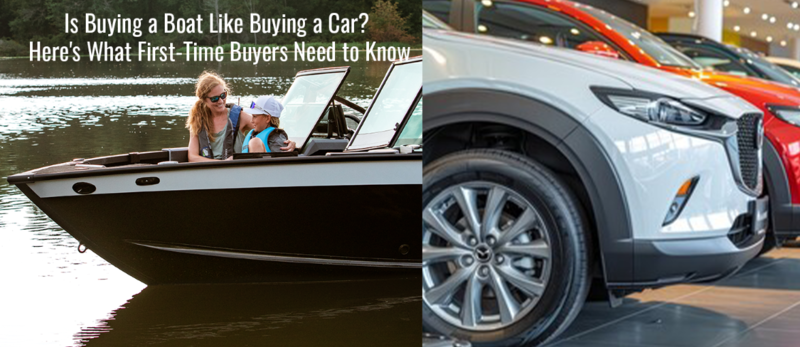
If you've never bought a boat before, it's natural to compare the experience to something you have done.
For most people, that's buying a car.
You'll visit dealerships, compare brands, think about financing, and eventually decide which model is right for you.
So, is buying a boat like buying a car?
Yes—but only at the beginning.
The buying process feels familiar. The decision itself is very different.
That's because a car is something you buy to get from one place to another.
A boat isn't just a purchase—it's a decision about how you want to spend your time.
That difference shapes everything—from the questions you should ask to the boat you'll ultimately be happiest owning.
We recently sat down with Paul Palmer, a sales consultant at Westre's Marine & Sport, who has sold both cars and boats during his career. When we asked him how the two experiences compare, his answer was immediate:
"In the process, it's the same. But on the back end, it's not."
He's right.
In this article, we'll explain where buying a boat feels just like buying a car, where the similarities end, and the mistake Paul sees first-time buyers make most often. By the end, you'll know what to expect—and how to avoid buying a boat that's right for your budget but wrong for your lifestyle.
Buying a Boat vs. Buying a Car at a Glance
Buying a Car | Buying a Boat |
You're buying transportation. | You're buying a lifestyle and experiences. |
Daily use is expected. | Seasonal or recreational use is more common. |
Large inventories make it easier to find the exact model you want. | Inventory is typically smaller, so availability can be more limited. |
The decision is usually based on practical needs. | The decision starts with how you want to spend your time on the water. |
Maintenance is generally familiar and routine. | Ownership includes seasonal maintenance, storage, and winterization. |
Most buyers know exactly what they need. | Many first-time buyers need help identifying the right type of boat. |
While those differences are important, they aren't what determines whether you'll love your boat five years from now.
That's where Paul's advice becomes especially valuable.
If you're starting to compare your options, our team at Westre's Marine can help you narrow down the right type of boat based on how you plan to use it—not just what's on the lot.
Buying a Boat vs. Buying a Car: The Buying Process Will Feel Familiar
The good news is that you don't have to learn a completely new buying process.
If you've purchased a car before, you already understand the basics.
You'll research brands, compare models, establish a budget, explore financing, and work with a salesperson to narrow your options.
Paul says that's one of the biggest misconceptions he encounters. Many first-time buyers expect buying a boat to feel overwhelming, but the process itself isn't what catches people off guard.
The real challenge is something else.
It's choosing the right boat.
How Buying a Boat Differs From Buying a Car
When someone shops for a car, they usually know the job the vehicle needs to do.
It needs to get them to work.
Carry the kids.
Handle winter roads.
Tow a trailer.
A boat starts with a different question:
What do you want to do on the water?
That's why Paul doesn't begin by recommending a brand.
He begins by asking questions.
Who will be on the boat most often?
Will you spend your weekends fishing, cruising, tubing, or entertaining?
How many people do you realistically expect to have with you?
Those answers matter more than the name on the side of the boat because they determine whether you'll still love your purchase years from now.
This is one of the biggest mindset shifts for first-time buyers.
You're not shopping for transportation.
You're shopping for experiences.
Comparing Boats Is Smart—If You're Comparing the Right Things
Some buyers worry they're looking at too many brands.
Paul says that's exactly what they should be doing.
People compare everything.
Cars.
Appliances.
Phones.
Boats are no different.
But there's a difference between comparing products and comparing specs.
It's easy to focus on horsepower, price, or electronics.
Those things matter.
But they shouldn't be the only things driving your decision.
Instead, ask yourself:
Will this boat fit the way I actually plan to use it?
A less expensive boat that doesn't fit your family isn't a better value.
A more expensive boat you never use isn't either.
The goal isn't finding the "best" boat.
It's finding the right one.
Where Buying a Boat Stops Being Like Buying a Car
This is where Paul's experience selling both products becomes especially valuable.
Inventory works differently.
If your local car dealership doesn't have the exact vehicle you want, they can often locate one through another dealer.
Boats are different.
Manufacturers build fewer boats, dealerships carry less inventory, and the exact model you're considering today may not be available tomorrow.
That doesn't mean you should rush into a purchase.
It does mean you shouldn't assume another identical boat will be easy to find.
There can also be a difference in how long the purchase takes. Many car purchases happen the same day or within a few days. A boat purchase can happen that quickly too, especially if the boat you want is already in stock and ready to go. But it's also common for the process to take a week or longer if you're adding options, and a special-order boat could take months before it's ready.
So if you have a specific date when you want to be on the water, make sure you discuss that timeline early in the buying process.
Financing can be different.
Because boats are recreational purchases rather than necessities, financing requirements are typically stricter than what buyers may be used to with a car or even a home purchase. Lenders can have higher requirements for factors like credit, income, debt-to-income ratio, and the amount being financed.
That doesn't mean financing a boat has to be difficult. It does mean you shouldn't assume that because you qualified for a certain car or home loan, you'll automatically qualify for a boat loan under the same terms.
Talk about financing early in the process, so you understand what you qualify for before narrowing your search to a particular boat.
Ownership is different, too.
Buying the boat is only the beginning.
You'll also need to think about storage, seasonal maintenance, winterization, and learning how to care for it properly.
A good dealership should help you understand those responsibilities before you buy—not after.
The Biggest Mistake First-Time Boat Buyers Make
We asked Paul if there was one mistake he wished every first-time buyer could avoid.
His answer wasn't buying the wrong brand.
Or negotiating poorly.
Or even financing.
It was buying a boat before thinking about how they'll actually use it.
Some buyers focus almost entirely on price.
Others get caught up in features.
Neither approach answers the most important question:
Will this boat still fit my life a few years from now?
Paul says he sees this pattern more often than people realize.
A buyer comes in focused on one thing—usually price or a specific model. They already have their mind made up, so they don't spend much time talking about how they actually plan to use the boat.
Then, a few seasons later, they come back looking to trade.
Not because the boat was poorly built.
Not because anything went wrong.
Simply because it wasn't the right boat for the life they wanted on the water.
That's why experienced salespeople ask so many questions before recommending a boat. They're not trying to complicate the buying process—they're trying to help you think beyond today's purchase and toward years of weekends, fishing trips, family outings, and memories.
Before you start shopping, ask yourself:
What will we use the boat for most often?
Who will usually be with us?
How often will we realistically use it?
Will this boat still fit our lives a few years from now?
If you can answer those questions first, choosing the right boat becomes much easier.
So, Is Buying a Boat Like Buying a Car?
Yes.
The buying process will feel familiar.
You'll compare options, discuss financing, and work with a salesperson much like you would when purchasing a vehicle.
But the similarities stop there.
A car gets you from one place to another.
A boat helps you create experiences.
That's why the best boat isn't necessarily the least expensive one or the one with the longest list of features.
It's the one that fits the way you and your family want to spend time together.
If you remember Paul's advice—that the process is the same, but the back end isn't—you'll walk into the dealership asking better questions, making better comparisons, and making a decision you'll be happy with long after the paperwork is signed.
The right boat isn't the one that simply gets you on the water.
It's the one that makes you want to come back next weekend.
Ready to Find the Right Boat?
If you've made it this far, you already know buying a boat isn't just about comparing brands or finding the lowest price.
It's about finding a boat you'll still be excited to own years from now.
That's the conversation we have every day at Westre's Marine & Sport.
When you visit one of our showrooms, we won't start by asking,
"Which boat are you looking for?"
We'll start by asking questions like:
What do you picture doing on the water?
Who's usually coming with you?
What would your perfect Saturday on the lake look like?
Those answers tell us far more than a budget or a brand preference ever could.
From there, we'll help you compare your options honestly, explain the tradeoffs, and recommend the boat we genuinely believe fits your needs—even if it's not the most expensive one on the lot.
Because buying the right boat is far more important than simply buying a boat.
Whether you're visiting our St. Cloud or Willmar showroom, we'd love to help you start that conversation.