Key Takeaways
Fishing boats should have their own properly matched trailers. Pontoon buyers may skip a trailer if they arrange transportation.
Owning one offers flexibility and a fit tailored to your boat. Buyers of 22-foot tritoons and longer are generally encouraged to purchase their own.
Compare purchase price and upkeep with transport costs, towing ability, and storage space.
Wondering which option fits your pontoon? Ask our St. Cloud or Willmar team about trailer costs, pickup, and storage for your lake.
Trailer vs No Trailer
You found the pontoon you want. Then you see the quote and realize the trailer could add thousands of dollars.
Buy it, and it might sit in your yard for nearly the entire year. Skip it, and you might be scrambling to move the boat if it needs service halfway through the summer. How do you know which choice makes sense?
Westre's Marine has helped thousands of customers since 2008 from its St. Cloud and Willmar locations in Central Minnesota. When I asked Sales Manager Joel Trisko whether pontoon buyers need a trailer, he asked how they planned to use the boat.
Here is what a trailer costs, when it earns its keep, and what you need to arrange if you go without one.
Do You Need a Trailer to Buy a Boat?
For a fishing boat, plan to own a properly matched trailer. Westre's generally quotes fishing boats as a boat, motor, and trailer package. The option to go without one applies to pontoons, which are generally quoted without a trailer.
Joel says most fishing boat customers tow between home and different lakes. Many pontoon owners put the boat on a lift and use one lake all summer. They may only need a trailer for spring launch and fall removal.
Even without owning a pontoon trailer, you need a way to launch, remove, and move the boat for service.
Factor | Own a pontoon trailer | Go without one |
Upfront cost | Buy a suitable trailer. | No trailer purchase. |
Moving the boat | Tow on your schedule. | Arrange shop trailer use or transport. |
Upkeep | Park and maintain it. | Pay applicable convenience and transport fees. |
Unexpected service | Move it yourself. | Arrange an available shop trailer or pickup. |
Both Westre's locations offer pontoon customers free use of a shop trailer for service work, seasonal storage, and maintenance, subject to availability. There is no rental fee. Westre's can also arrange pickup, delivery, and launch.
What Does a Boat Trailer Cost Compared With Going Without One?
The sticker price is only one part of the comparison.
If You Buy a Trailer
At Westre's, new pontoon trailers run about $4,000 to $9,000, while used pontoon trailers run about $2,000 to $4,000. Larger, heavier pontoons generally need more expensive trailers; higher-end features also raise the price. New fishing boat trailers run about $1,800 to $9,000, with the upper end serving the largest, most expensive fishing boats. Most fishing boat packages already include a trailer, so check your quote before treating that range as an additional cost.
Ownership also means keeping registration current and checking wheel bearings and lights. You need parking space and a vehicle equipped to tow the combined load.
Both Westre's locations offer summer parking for customer trailers on their lots, so you may not need to keep yours at home. Ask about current pricing and availability.
If You Skip the Pontoon Trailer
Budget for each time the pontoon needs to move: initial delivery, fall removal, spring delivery, and service trips. Free shop trailer use lets you handle eligible trips yourself; hiring Westre's to transport the boat is a separate service.
At both locations, the $100 convenience fee for not having a trailer is charged once per storage season. Frequent additional trailer use may result in extra charges, so confirm your arrangements with the team.
Westre's published 2026–27 rates list St. Cloud pickup or delivery to Annandale, Becker, Little Falls, and Richmond at $100 per trip with one person or $150 with two. Willmar lists $200 or $300 per trip, respectively. Compare expected trips and fees over several seasons with a trailer's purchase price and upkeep. Confirm your charges; rates can change.
When Is Buying a Pontoon Trailer Worth It?
If you regularly want to take your pontoon to different lakes, owning a trailer makes those trips easier to plan. You can also bring it home or take it in for service on your own schedule.
Westre's generally encourages buyers of tritoons 22 feet and longer to purchase their own trailer, even if they do not travel frequently. A purchased trailer can be set up for the exact model, while a shop trailer accommodates multiple models. That fit is another factor beyond how often you tow.
Check your tow vehicle's capacity against the loaded boat and trailer. A large pontoon can be intimidating to tow and launch. If you would rather hire someone for that work, owning a trailer may offer less convenience than expected.
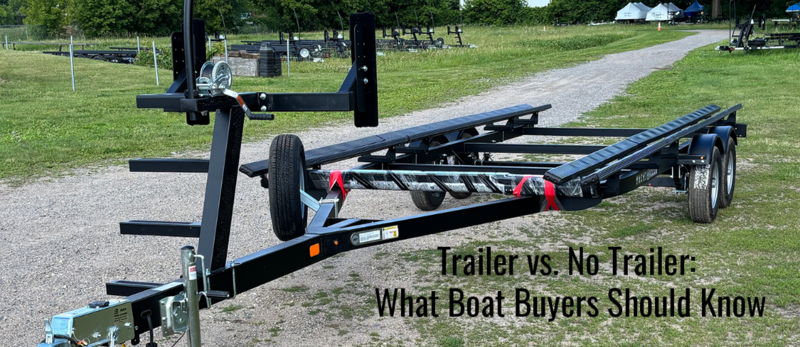
Trailer type matters, too. A scissor trailer can lift a pontoon from the ground. A bunk trailer supports its tubes, but loading one from dry storage may require special equipment. Ask which suits your plans.
When Does Going Without a Pontoon Trailer Make Sense?
Westre's sales rep Ryan Tuffs spoke with two customers in fall 2026 who considered buying trailers. Both keep their boats on the lake during the season. Westre's handles fall pickup, offseason storage, and spring delivery for them. Once they understood that Westre's could handle those trips and storage, they saw little need to buy and store trailers of their own.
Skipping the trailer avoids finding room for it and maintaining it. Left outside, it still needs attention; exposure to the elements can contribute to rust or electrical problems.
The tradeoff is flexibility. For an unexpected service trip, you will need an available shop trailer or someone who can move the pontoon. You may also have to work around the provider's schedule for launching or removal.
What Should Minnesota Pontoon Buyers Plan For Each Season?
Follow the pontoon through a full year. Who will launch and remove it? How will it get to winter storage, back to the lake, or to a service appointment?
At least a week's notice is preferred for trailer use or transport arrangements. Mid-summer can be easier to schedule, but demand changes. Spring and fall are especially busy, and weather can affect plans, so confirm availability and stay flexible.
If you are unsure how often you will move the pontoon, Joel says you can use it for a season and buy a trailer later. You would still need one suited to the boat and a way to load it, which may add cost.
Five Questions to Ask Before You Buy
Will the pontoon stay at one lake, or do I expect to visit others?
Does its size or model make a dedicated trailer the better choice?
Can my vehicle safely tow the loaded pontoon and trailer, and am I comfortable launching it?
Where would I park and maintain a trailer?
What would seasonal transport and service trips cost without one?
Joel says a common mistake is buying a trailer without considering how little it may be used or where it will sit. These answers help determine whether its convenience and fit justify the purchase.
Match the Trailer to Your Boating Plans
Fishing boats should have their own matched trailers. For pontoons, the decision depends on size, fit, mobility, and seasonal arrangements. If yours stays on one lake, Westre's trailer use, transport, and storage services may meet your needs. You can also purchase a trailer later if your plans change.
If you are deciding whether a trailer is right for your pontoon, contact us online or call your closest location. Tell us about your boat, lake, tow vehicle, and storage plans. We'll answer your questions honestly and help you choose the option that fits.