Boat Winterization and Storage Explained: What Minnesota Boat Owners Need to Know
7 min read
Key Takeaway
In Minnesota, winterization is about protecting your boat mechanically from freezing temperatures and months of inactivity. Storage is a separate decision about how much protection you want for the boat itself while you're not using it.
You can winterize a boat yourself, and you don't necessarily need the most expensive storage option. But as Westre’s Sales Manager Joel Trisko explains, you need to weigh what you're saving against the risk you're taking if something isn't done correctly. And don't wait until the first hard freeze to start making your plan.
What Minnesota Boat Owners Should Know Before Winter Arrives
Every fall, Minnesota boat owners face the same dilemma. The weather is still nice enough to squeeze in another weekend on the water, but freezing temperatures are getting closer.
So when do you actually need to winterize your boat? And once you do, where should you store it?
Westre’s Marine has been in business since 2008, with locations in St. Cloud and Willmar. During that time, we've served thousands of customers throughout Central Minnesota and have seen many of the same winterization questions and mistakes come up year after year. Some owners wait until freezing temperatures arrive before scheduling service. Others assume adding fuel stabilizer to the tank is all they need to do. And some aren't sure whether storing their boat indoors means they can skip winterization altogether.
To help clear up those questions, I sat down with our Sales Manager, Joel Trisko.
Joel's philosophy is simple. Winterization is about protecting your investment. Storage is about deciding how much additional protection makes sense for your situation and budget.
In this article, Joel explains what winterization involves, what happens if you skip it, whether you can do it yourself, your winter storage options, and when you should start planning.
Winterization vs. Storage: What's the Difference?
Winterization | Storage |
Protects the boat mechanically | Protects the boat while it's not being used |
Addresses the motor, fuel, battery, fluids, and other components | Addresses exposure to weather, sunlight, dirt, critters, and security |
Especially important before freezing temperatures | Depends more on your space, budget, and desired protection |
Happens before or as the boat goes into storage | Can be indoor, outdoor, heated, or at home |
Understanding that distinction makes the rest of the decision much easier.
What Does Boat Winterization Actually Include?
For the outboard-powered boats Westre’s services, winterization addresses several areas that could cause trouble after sitting through a Minnesota winter.
While the exact process depends on your motor and its systems, typical winterization can include:
Preparing the motor for months of freezing temperatures and inactivity.
Charging and disconnecting the battery so it's properly prepared for storage.
Stabilizing and circulating the fuel through the fuel system.
Checking and servicing the lower unit, including checking the oil for signs of water.
Removing the prop and inspecting for fishing line that may have wrapped around the prop shaft.
Greasing necessary fittings and components.
Checking and greasing wheel bearings on the trailer.
Making sure water is removed where necessary so it can't freeze and cause damage.
The exact process depends more on the motor and systems than whether you own a fishing boat or pontoon. A pontoon and fishing boat with outboards, for example, may have similar basic winterization needs.
More complex inboard and wake boat systems can require different procedures. Westre’s does not currently service inboard wake boats because of that additional complexity.
One thing Joel specifically warns owners about is fuel stabilizer.
Some people assume they can pour stabilizer into the gas tank and call it good. But Joel says the stabilizer needs to circulate through the fuel system.
“You actually want to get that stabilizer to actually filter through.”
Westre’s own winterization process specifically includes stabilizing and circulating the fuel, which reinforces Joel's point.
Winterization isn't just checking boxes. It's making sure each step is actually accomplishing what it's supposed to.
What Happens If You Don't Winterize Your Boat?
In Minnesota, the most obvious concern is freezing water.
If water remains inside components and freezes, it expands. On an I/O, that can cause serious damage, including a cracked engine block.
Patrick, our Service Department Manager at Westre’s, has seen this happen multiple times when boats weren't properly winterized. One example from about three years ago involved an owner who didn't realize their I/O needed to be winterized. Water froze inside the engine, broke the engine block, and ultimately resulted in a repair bill of more than $7,000.
That's an extreme example, but it shows why proper winterization matters. A relatively small mistake or misunderstanding in the fall can become a much more expensive problem in the spring.
Freeze damage isn't the only concern. Fuel sitting unused for months can age and break down, and a battery that isn't properly prepared may be dead when you're ready to get back on the water.
That's why Joel views winterization less as another boating expense and more as protecting an investment you've already made.
Can You Winterize a Boat Yourself?
Technically, yes.
Whether you should depends on your mechanical ability, knowledge of your particular motor, and comfort assuming the risk if you miss something.
Joel personally prefers professional winterization, even for his own boat.
His reasoning isn't that boat owners are incapable of doing the work. Joel puts it another way: If doing it yourself only saves you $100 or $150, consider whether those savings are worth the risk if you're not completely confident in the process.
There's another benefit to having a professional do it: While the boat is in the shop, a technician may spot a maintenance issue you didn't know was there.
So instead of asking only, “Can I winterize my boat myself?” ask yourself:
“Do I know exactly what my boat requires, and am I comfortable taking responsibility if I miss something?”
If the answer is yes, DIY may be reasonable. If you're unsure, that's where professional service can provide value.
Where Should You Store Your Boat During a Minnesota Winter?
There's no single storage option that's right for everyone.
In fact, Joel doesn't pay someone else to store his own boat.
He has his boat professionally winterized, then brings it home and stores it in his unheated garage because he has the space.
That's worth emphasizing. Westre’s offers storage, but that doesn't mean every customer needs to buy it.
Storage option | Main advantage | Main consideration | Best for |
Outdoor storage | Typically a more affordable storage option | More exposure to the elements | Owners prioritizing affordability who don't have suitable space at home |
Indoor cold storage | Protects the boat, trailer, tires, and finish from the elements | Winterization is still important | Owners who want greater protection without paying for heated storage |
Heated indoor storage | Offers additional protection from freezing temperatures and weather | Typically costs more and is offered by some storage providers, not currently by Westre’s | Owners willing to pay more for maximum protection from winter conditions |
Your own garage | Convenient and may eliminate storage fees | Requires adequate space | Owners like Joel who have suitable space at home and don't need to pay someone else for storage |
The decision really comes down to your space, budget, and how much protection you want. If you have appropriate space at home, Joel's own setup shows that paying for storage isn't always necessary. If you need somewhere else to keep the boat and indoor storage fits your budget, Joel prefers it because it protects the entire boat from the elements. Outdoor storage can still be a practical option when the boat is properly winterized and protected.
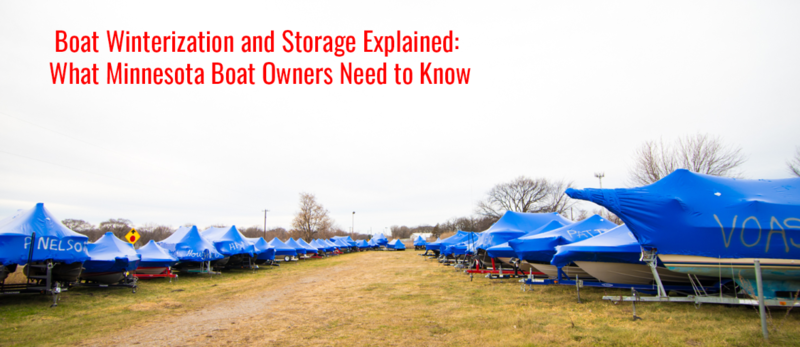
Joel also recommends considering where the boat is actually being stored and how secure the facility is. A boat sitting in an open field is a different proposition from one stored in a secured facility.
Shrink wrap can provide additional protection, particularly outdoors. It can also help protect against dust, dirt, and critters indoors.
How Much Do Boat Winterization and Storage Cost?
Costs vary based on your motor, the services being performed, your boat's size, how it's stored, and what's included.
To give you a realistic starting point, Westre’s current à la carte winterization pricing starts at $295 for a main engine without an oil change and $385 with an oil change. For customers who also need storage, Westre’s offers packages that combine winterization, storage, and spring startup. At our St. Cloud location, for example, a package for a boat up to 20 feet with a 4-stroke outboard currently starts at $995 without an oil change. Prices and available services vary by motor, boat, and location and are subject to change.
That's one reason Joel cautions against comparing prices based on the number alone.
The same applies when comparing storage facilities. Is the boat indoors or outdoors? Is shrink wrapping included? Is the facility secured? Are you paying monthly or for the season? Does the price include spring services?
Two prices aren't comparable until you understand what's included.
For exact pricing based on your boat and motor, you can check Westre’s current winterization and storage pricing.
When Should You Winterize Your Boat in Minnesota?
Joel doesn't use one specific date. He watches the forecast.
If October is still bringing temperatures in the 50s and 60s during the day and the 40s overnight, you may have boating left. Once freezing temperatures become a realistic possibility, you need to understand what your specific motor requires.
The mistake is waiting until the freeze arrives before making a plan.
“As soon as it starts freezing, usually what happens is people push the panic button, and then everybody wants it done.”
You don't necessarily have to stop boating early just to beat the rush. Instead, contact your service department and schedule ahead when possible. That allows you to plan your final outings while already knowing when the boat is going in.
What Should You Do Before Dropping Your Boat Off for Winterization or Storage?
Before your appointment:
Remove tubes, chairs, and other bulky belongings that could interfere with service work.
Make sure technicians can easily access the boat and motor.
Tell the service team about any known problems you want inspected or repaired.
Consider maintenance you've been putting off, such as a tune-up or trailer light repair.
Wait until winterization is complete before loading the boat with items you plan to store in it for winter.
Fall is also a good time to take care of maintenance you've been putting off. If you already know your boat needs a tune-up, trailer light repair, or another service, consider getting it done while you're not using the boat.
Otherwise, you may discover in April that you need work at the same time everyone else wants their boat ready.
Joel's reasoning is simple: Why give up boating time in the spring for something that could have been handled during the winter?
Protect Your Boat Now So You're Ready in Spring
You don't necessarily need the most expensive storage option, but you do need to make sure your boat is properly prepared for freezing temperatures.
That's the distinction to remember: winterization protects your boat mechanically. Storage determines how much additional protection the boat gets while you're not using it.
If you're mechanically experienced and know exactly how to winterize your particular motor, you may choose to handle it yourself. If you have appropriate space in your garage, you may not need to pay for storage. If you prefer the additional protection and convenience of professional winterization and indoor storage, those are options too.
What's important is understanding what your particular boat needs and making those decisions before freezing temperatures make them for you.
If you have questions about winterization and storage, or you're ready to schedule your winterization or storage, reach out to our team at Westre’s Marine in St. Cloud or Willmar. We'll walk you through what the process looks like, what your boat needs, and the options available so you can make the decision that's right for you.