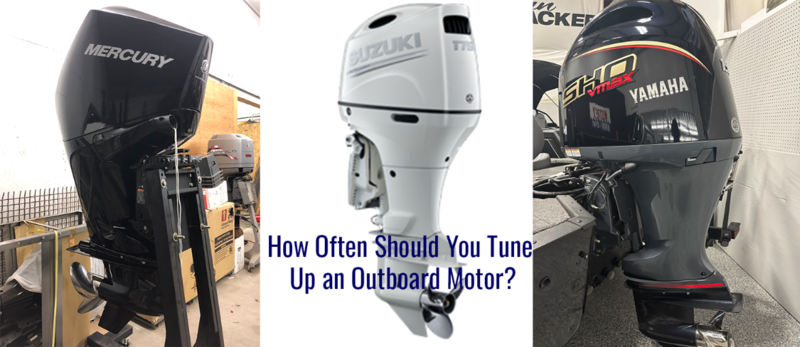
How Often Should You Tune Up an Outboard Motor? What to Know About the 3-Year Service
5 min read
Key takeaway:
For Mercury, Yamaha, and Suzuki outboards, three years or 300 hours, whichever comes first, is the primary tune-up benchmark. Westre’s Marine recommends following that interval and never going longer than five years between tune-ups, even if you put relatively few hours on your engine. If you're due or getting close, winter is a smart time for service because you won't sacrifice boating days, and Westre’s offers 20% off service labor during the off-season.
Call Westre’s Marine in St. Cloud or Willmar to schedule your tune up.
How Often Should You Tune Up an Outboard Motor?
Your boat ran great all summer. It started every time, sounded normal, and never gave you a warning. So spending money on a tune-up can feel unnecessary.
The problem is that waiting for your outboard to show symptoms can mean discovering an issue at exactly the wrong time: when you're trying to use it.
Patrick Dolan, Service Department Manager at Westre’s Marine, has seen this repeatedly during his five years in marine service. Since 2008, Westre’s has served thousands of boaters from our St. Cloud and Willmar locations.
In this article, we'll explain what an outboard tune-up includes, why the three-year service matters even when your engine runs well, and why winter may be one of the smartest times to get it done.
What Is an Outboard Motor Tune-Up, and What Does It Include?
An outboard tune-up is a comprehensive service based on your engine's manufacturer-recommended maintenance schedule.
A tune-up for Mercury, Yamaha, and Suzuki outboards service includes:
Engine oil and gear lube service
Spark plugs
Fuel filters
Impeller and water pump components
Thermostat
Applicable belts
Compression testing when appropriate
Computer diagnostics
Overall engine inspection and testing
Technicians can also connect to the engine's computer, review operating information, verify temperatures, run the engine, and look for signs that something isn't functioning as it should.
As Patrick explains, “You can think the engine is running fine, but there can still be things going on internally that you aren't aware of.”
A tune-up can't guarantee your engine will never have a problem. It allows technicians to perform scheduled maintenance and potentially identify developing concerns before they interfere with your time on the water.
Why Does the 3-Year or 300-Hour Outboard Tune-Up Matter?
For Mercury, Yamaha, and Suzuki outboards, three years or 300 engine hours, whichever comes first, is the tune-up benchmark.
A fishing guide might reach 300 hours well before three years. Many recreational Minnesota boaters will take much longer.
But low hours don't stop components from aging.
Patrick remembers a boat that had been sitting for about two years. When the technicians started the engine, the impeller came apart because its rubber fins had become old and brittle.
The component hadn't worn out from heavy use. It had deteriorated with time.
“There are things that can deteriorate even because they're not being used,” Patrick says.
That's why Westre’s recommends following the three-year/300-hour interval and never stretching tune-up maintenance beyond five years simply because your engine has low hours.
My outboard runs perfectly. Do I still need a tune-up?
A motor running well is good news, but it doesn't reset its maintenance schedule. Tune-ups are preventive. The goal is to maintain components based on time, engine hours, and condition instead of waiting for an obvious problem.
What Can Happen If You Keep Putting Off an Outboard Tune-Up?
Crossing three years or 300 hours doesn't mean your engine will suddenly fail.
But as maintenance gets postponed, Patrick says boaters may notice weak water flow from the telltale, rough running, misfires, fuel-related problems, or temperature issues.
One of the most commonly ignored is a weak telltale. Patrick has heard customers say they noticed weaker water flow for months but assumed the engine would alert them if it became serious.
An aging impeller can contribute to cooling problems. If an engine severely overheats, what began as a maintenance item can potentially become a repair costing thousands.
There's another cost that matters in Minnesota: time.
“If your car is out of commission, you can rent a car or sometimes get a loaner,” Patrick explains. “In the marine industry, that's just not really a thing.”
If your boat is down during the season, those are boating days you don't get back.
What's the Difference Between a Tune-Up, Routine Maintenance, and Winterization?
These services overlap, but they don't accomplish the same thing.
Service | Primary purpose | Examples |
Winterization | Protect the boat and engine through winter | Gear lube inspection, fuel-system protection, cold-weather preparation |
Routine maintenance | Address individual maintenance items | Oil changes, spark plugs, impeller |
Outboard tune-up | More thoroughly service and evaluate the engine | Scheduled maintenance, filters, thermostat, diagnostics, testing |
Winterization is primarily about protecting your boat through the cold months. A tune-up focuses on the maintenance and condition of the engine.
So, winterizing your boat every fall does not necessarily mean your outboard is current on its tune-up schedule.
Why Is Winter a Smart Time for an Outboard Tune-Up in Minnesota?
The biggest advantage is simple:
You're not using your boat anyway.
Having your boat serviced in January doesn't hurt nearly as much as having it sit in the shop in June.
Spring and early summer are also busier for marine service departments. Getting scheduled maintenance done during winter moves that work out of the portion of the year when you actually want the boat.
Why Does Westre's Offer 20% Off Off-Season Service Labor?
Westre’s offers 20% off service labor during our off-season period, including tune-up work. You do not have to store or winterize your boat with Westre’s to qualify.
And we'll be transparent about the discount: it works for both sides.
You save money and avoid sacrificing time on the water. We can keep our technicians working during a slower part of the year instead of trying to fit the same work into the spring rush.
The exact off-season period depends on weather and shop demand, so there isn't a guaranteed calendar cutoff.
[PLACE WESTRE’S “20% OFF LABOR DURING THE OFF-SEASON” GRAPHIC HERE]
Does Your Outboard Actually Need a Tune-Up This Winter?
Not necessarily.
If this sounds like you... | What to consider |
Tune-up was 2 years ago, low hours, engine runs well | You're probably not due yet. |
You're at 3 years or 300 hours | You've reached the recommended interval. |
You're around 250 to 280 hours and expect heavy use next summer | Winter may be smarter than reaching 300 hours midseason. |
You're approaching or beyond 5 years | Don't continue postponing based only on low hours. |
You bought a used boat and don't know its service history | Consider establishing a known maintenance baseline. |
If Westre’s previously serviced your engine, we can check our records. If you bought a used boat with unknown service history, establishing a baseline means you'll know when the work was done and when to start thinking about it again.
What Outboard Brands Does Westre's Marine Service?
Westre’s services Mercury, Yamaha, and Suzuki outboard motors. Our technicians are trained to work on these products, with parts and support readily available.
If you own another brand, follow the maintenance recommendations for your specific manufacturer and engine.
How Much Does an Outboard Tune-Up Cost at Westre's Marine?
Westre’s currently publishes the following estimated tune-up pricing:
Outboard | Estimated Tune-Up Price* |
Suzuki 40-250 HP | $800-$975 |
Mercury 40-150 HP | $950-$1,250 |
Mercury Verado | $1,300-$1,450 |
*Published pricing includes applicable taxes and fees and is subject to change. Yamaha owners should contact Westre’s for current engine-specific pricing.
During Westre’s qualifying off-season period, service labor is discounted 20%.
Don't Give Up Minnesota Boating Days for Maintenance You Could Do This Winter
You don't get many boating months in Minnesota.
For Mercury, Yamaha, and Suzuki outboards, three years or 300 hours, whichever comes first, is the tune-up benchmark. If low annual hours have caused you to stretch the calendar, Westre’s recommends never going longer than five years.
That doesn't mean every outboard needs a tune-up this winter. But if you're due, getting close, approaching five years, or don't know when the last tune-up was completed, winter is a good time to figure it out.
Not sure when your last tune-up was or whether you're due? Call Westre’s Marine in St. Cloud or Willmar. Our service team can review your engine, hours, and available service history and help determine what your Mercury, Yamaha, or Suzuki actually needs.
If you are due, you'll avoid sacrificing valuable boating days and can save 20% on service labor during Westre’s off-season period.
Westre's Marine, St. Cloud
1101 US-10, St. Cloud, MN 56304
(320) 230-0000
Westre's Marine, Willmar
5102 Highway 71 NE, Willmar, MN 56201
(320) 222-2628
Handle the maintenance while your boat is already off the water, so when Minnesota gives you your boating season back, you can spend it using your boat instead of waiting for it.